Questions hidden inside
- What does a genealogy of moral values try to reveal?
- Is Nietzsche criticizing every form of morality or particular moral formations?
- What could it mean to create values without treating values as arbitrary preferences?
- How do perspectivism, self-formation, and affirmation challenge familiar pictures of truth and agency?
A philosopher of criticism and experiment
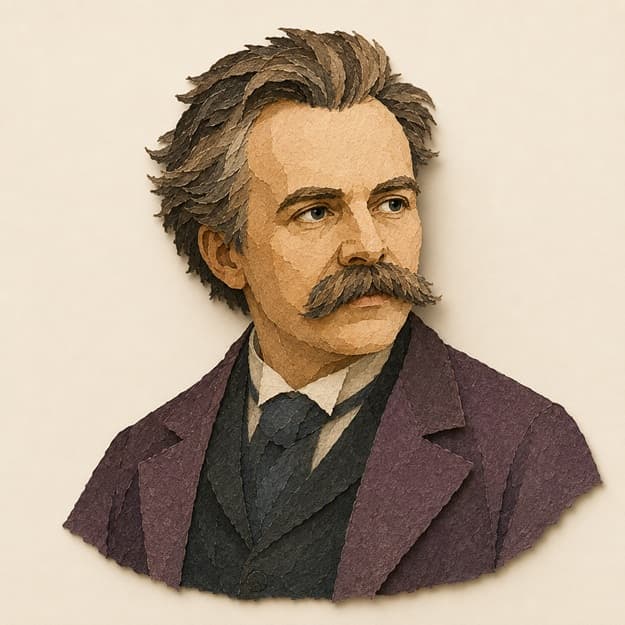
Friedrich Nietzsche lived from 1844 to 1900. Trained as a classical philologist, he wrote philosophy in aphorisms, essays, polemics, narratives, poems, and other forms rather than presenting one systematic treatise. Major works include The Gay Science, Thus Spoke Zarathustra, Beyond Good and Evil, and On the Genealogy of Morality.
His writing examines morality, religion, truth, culture, psychology, art, agency, and the possibility of life-affirming values. Because Nietzsche changes voices, uses irony, stages hypotheses, and revises earlier views, an isolated sentence rarely settles what he believes.
Genealogy asks how values acquired authority
Nietzsche's genealogy investigates the historical and psychological conditions through which moral concepts become compelling. It asks what needs, conflicts, affects, and forms of power may be expressed through ideals that later present themselves as timeless or self-evident.
This method does not show that a value is false merely because it has a history. It changes the evaluative question: what kind of person or culture does a value help form, what does it enable or suppress, and can its authority survive a more honest account of its origins and effects?
A genealogy can unsettle a value's claim to timeless authority without proving that the opposite value is correct.
A critique of morality, not a license for anything
Nietzsche criticizes moral formations that he believes depend on questionable pictures of free will, guilt, equality, responsibility, and a transparent self. His accounts of ressentiment, bad conscience, punishment, and ascetic ideals explore how suffering and hostility can be redirected inward or given moral meaning.
It is misleading to conclude that Nietzsche rejects every norm or thinks any action is permissible. He praises qualities such as honesty, courage, independence, artistry, discipline, and affirmation, although scholars disagree about how these commitments fit together and whether they form a defensible ethics.
| Idea | Careful interpretation | Common distortion |
|---|---|---|
| Genealogy | Investigate the origins, functions, and effects of values | Refute a value solely by describing its history |
| Perspectivism | Recognize that inquiry proceeds from situated interpretive standpoints | Claim that every opinion is equally true |
| Value creation | Undertake demanding transformation under real constraints | Choose any preference by personal decree |
| Will to power | A disputed theme with psychological and broader interpretations | A simple command to dominate other people |
Nihilism and the problem of new values
Nietzsche treats the erosion of inherited religious and moral authority as a cultural danger as well as an opening. Nihilism names a family of problems in which established values lose credibility while people lack adequate alternatives, not simply a doctrine that nothing matters.
Talk of creating values is deliberately challenging. Nietzsche often presents self-formation through artistic metaphors, discipline, reinterpretation, and the integration of conflicting drives. Value creation is therefore not effortless invention, and scholars disagree about its standards, intended audience, and compatibility with his criticism of universal morality.
Perspective, self-formation, and a contested legacy
Perspectivism draws attention to the interests, concepts, affects, and conditions that shape inquiry. It need not imply that evidence or better interpretation disappears. Nietzsche repeatedly values intellectual honesty and the capacity to test a view from more than one perspective.
His criticisms of equality and compassion, elitist language, views about flourishing, and later political appropriations demand scrutiny rather than admiration by default. A responsible reading can use Nietzsche's questions about inherited values and self-deception while remaining free to reject his conclusions and exclusions.
- Read claims within the work, voice, target, and stage of Nietzsche's development.
- Distinguish criticism of particular moralities from rejection of every norm.
- Do not equate perspectivism with the claim that all opinions are equal.
- Treat positive reconstructions of Nietzsche's ethics as interpretations rather than settled doctrine.
- Evaluate Nietzsche's favored values and exclusions with the same critical pressure he applies to inherited morality.
Continue with Ada

Professor Ada Rowan
Test an idea or objection
Compare perspectives, test an assumption, or develop an objection using this reviewed page as context.
Related paths
Paths through the present
Recent reflections featuring this philosopher
Sources
- Nietzsche: Beyond Good and Evil — Friedrich Nietzsche (2001)
A modern scholarly translation of Nietzsche's critique of philosophical dogmatism, inherited morality, the stable transparent self, and conventional values, together with his difficult proposals concerning free spirits, virtues, and philosophers of the future.
View source - Nietzsche: On the Genealogy of Morality and Other Writings — Friedrich Nietzsche (2017)
A current scholarly edition of Nietzsche's genealogical inquiry into moral values, guilt, conscience, responsibility, punishment, ressentiment, and ascetic ideals. It supports analysis of genealogy as historical and psychological criticism rather than a neutral chronology or a genetic theory.
View source - Friedrich Nietzsche (2026)
A current scholarly overview of Nietzsche's life, works, critique of religion and morality, value creation, self-fashioning, perspectivism, eternal recurrence, philosophical style, and interpretive disputes. Its breadth resists reducing him to nihilism or will to power.
View source - Nietzsche's Moral and Political Philosophy (2020)
A specialist account of Nietzsche's critique of morality, perfectionist themes, metaethics, agency, equality, and the limits of attributing a systematic political philosophy to him. It helps distinguish a criticism of particular moral formations from rejection of every normative commitment.
View source
Last modified 2026-07-31. Reviewed by Thinking Paths editorial team.